
U.S. Forest Service Big Overhaul: What’s Changing?
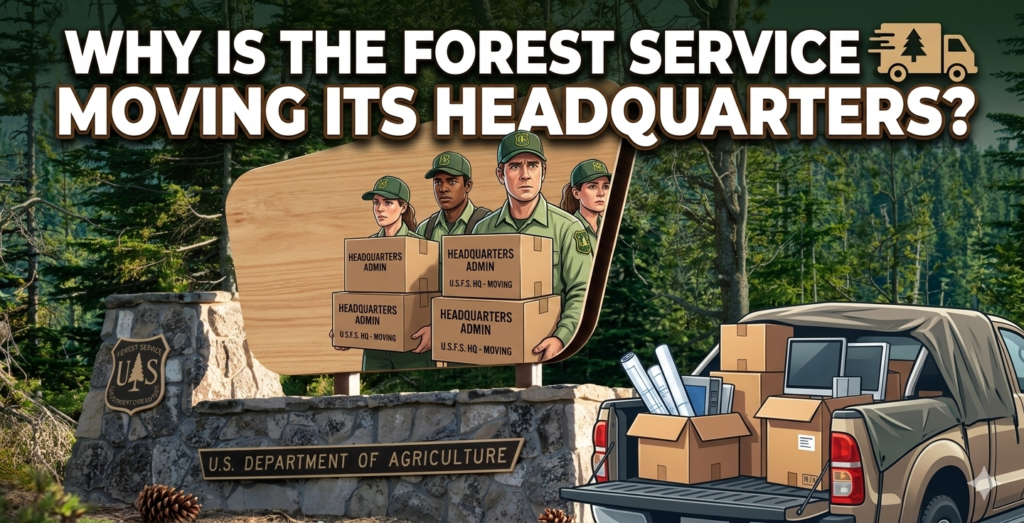
A major restructuring of the U.S. Forest Service (USFS) is set to reshape how millions of acres of forests across the western United States are managed. The plan, announced by the U.S. Department of Agriculture (USDA), includes relocating offices, shutting down research facilities, and shifting leadership closer to western forest regions.
According to recent reports, the agency will:
- Move its headquarters from Washington, D.C. to Salt Lake City, Utah
- Shut down multiple regional offices, including Portland
- Consolidate research operations in Fort Collins, Colorado
- Introduce a new state-based management model
This marks one of the biggest structural changes in the agency’s 100+ year history.
Why Portland Matters in This Decision
Portland has long been a critical hub for forest management in the Northwest.
Key Roles of Portland:
- Oversees federal lands across Oregon, Washington, and Alaska
- Handles wildfire coordination, timber policy, and conservation
- Hosts the Pacific Northwest Research Station, employing nearly 250 scientists
This research station has played a vital role in:
- Climate research
- Forest ecosystem studies
- Wildfire risk analysis
However, under the new plan:
- The regional office will lose authority
- The research station may shut down
- Hundreds of employees may be relocated
What Will Replace Portland’s Role?
The restructuring introduces a state-level governance system.
Key Changes:
- 15 state directors will replace regional offices
- A new office may open in Salem, Oregon
- Technical and planning work will shift to centralized service centers
At the same time, all major research functions will be consolidated into a single hub in Colorado.
Government’s Justification
Officials say the move is designed to improve efficiency and decision-making.
Government Claims:
- Bring leadership closer to forests and communities
- Improve forest management response
- Save taxpayer money
- Boost employee recruitment
USDA officials argue that most national forest land lies in the western U.S., making the shift logical.
Critics Raise Serious Concerns
Environmental groups and experts have strongly criticized the plan.
Key Concerns:
- Loss of scientific expertise
- Disruption in wildfire preparedness
- Weakening of federal oversight
- Risk of staff resignations instead of relocation
One major concern is timing — the restructuring comes as wildfires across the western U.S. are becoming more severe.
Impact on Wildfire Management
One important clarification:
👉 Firefighting operations will remain unchanged
- The Northwest Coordination Center will continue operating
- Deployment of wildfire resources will not be directly affected
However, critics warn that losing research and regional expertise could indirectly impact long-term wildfire strategies.
The Bigger Picture
This restructuring is not limited to Portland.
Nationwide Changes Include:
- Closure of research facilities in multiple states
- Centralization of scientific work
- Decentralization of decision-making to states
Reports suggest the changes could affect hundreds of employees and reshape how 193 million acres of public land are managed.
What Happens Next?
- Portland office closures and relocations are expected within the next 2 years
- Research staff may be moved to Fort Collins
- A new administrative structure will gradually replace the old regional system
The transition timeline suggests full implementation could take until 2027.
Final Takeaway
The U.S. Forest Service reorganization is a high-impact policy shift with long-term consequences.
- Portland could lose its status as a forest management hub
- Research operations will be centralized
- Decision-making will move closer to western states
While the government calls it a modernization effort, critics see it as a risky move during a time of growing environmental challenges.
FAQs
Q1. Why is the Forest Service moving its headquarters?
The government says it wants leadership closer to western forests, where most federal land is located.
Q2. What will happen to Portland offices?
The regional office may lose authority, and the research station could be closed with staff relocated.
Q3. Will wildfire management be affected?
Direct firefighting operations will remain unchanged, but experts warn of indirect impacts.
Q4. Where will research work be moved?
All research is expected to be centralized in Fort Collins, Colorado.
About The Author

Pingback: Chandigarh Clerk Recruitment 2026 Apply Online 257 Posts
Pingback: Artemis 2 Update: NASA Moon Mission Begins Journey